

For some, the colonisation of Mars may seem like futuristic science fiction.
However, neuroscientists and neuroradiologists – such as NIF user Monash University’s Professor Meng Law, NIF’s SAHMRI researchers and NIF’s Scientific Advisory Committee Chair Professor Paul M. Parizel – are already developing world-first studies that could have significant implications for the future of human colonisation on the Moon and Mars.
NIF facilities are enabling this forward-looking research, with work being undertaken at:
- the Clinical and Imaging Research Centre (CRIC; at SAHMRI) in partnership with Adelaide University
- the iBrain lab at Monash’s Translational Medicine’s Department of Neuroscience
- the University of Western Australia with teams from the University of Antwerp (Belgium), Ludwig-Maximilians-University Munich (Germany) and Lomonosov Moscow State University (Russian Federation).
Advanced imaging can document challenges to astronauts’ health
Prof Law researches how microgravity (the near-weightless environment of space) impacts the brain and eye health of astronauts.
His work investigates how spaceflight changes the way fluids behave in the body – especially within the brain – and how that leads to structural and functional effects in astronauts. This is in collaboration with Prof Donna Roberts, Deputy Director of Research at the International Space Station.
In a world-first study, Law analysed MRI data from astronauts from NASA, the European Space Agency and Russia’s Roscosmos.
He studied how extended space flight affects astronauts’ brains by acquiring three-dimensional high-resolution (1-mm3) T1-weighted images on 3T MRI machines from multiple sites. Then, Prof Law applies algorithms that were developed by NIF and Monash scientists to analyse the data.

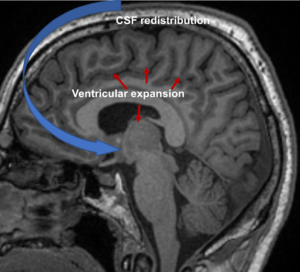
Prolonged space travel waterlogs the brain
In space, without the usual 1G of gravity, blood and fluid builds up in the brain, which can result in swelling of the brain and in/around the optic nerves. In a matter of weeks, 30% of astronauts will report headaches or visual disturbances called spaceflight-associated neuro-ocular syndrome (SANS).
SANS can cause significant symptoms such as changes to the brain’s structure, a shift in brain fluid, and vision issues that in particular can impact the in-flight performance of astronauts.
Prof Law says imaging will play an important role in understanding and mitigating the syndrome.
Understanding how microgravity affects the brain and eyes is critical for protecting astronaut health on long spaceflight missions, developing countermeasures to prevent or mitigate these vision and neurological changes, planning mission durations and health monitoring for future space explorers.
For example, SpaceX and NASA are already working on simulating gravity with devices that astronauts could sleep in, ‘spinning’ fluid back into the lower extremities, said Prof Law.
NIF supports harmonised imaging, data sharing, analysis
Prof Law’s studies often involve pooling MRI data from international astronaut cohorts. This is essential when comparing images taken before and after spaceflight across different countries and agencies.
Prof Law and his colleagues have accessed pooled data from brain MRIs of NASA, European Space Agency and Roscosmos astronauts.
They used MRI data to analyse the changed that occurred in the perivascular spaces in NASA and European Space Agency astronauts and Roscosmos cosmonauts after a 6–12 month spaceflight on the International Space Station.
More MRI data, more information
Prof Law is looking forward to obtaining even more precise data about the effects of low gravity on the brain by using generative AI to analyse ultra-low field MRI scans on Polaris Dawn (SpaceX) astronauts within a short time of them landing.
Most of the data analysed to date has been obtained weeks to months after astronauts have returned, so there is high interest in what happens immediately after they return.
Astronaut wellbeing is also a key consideration
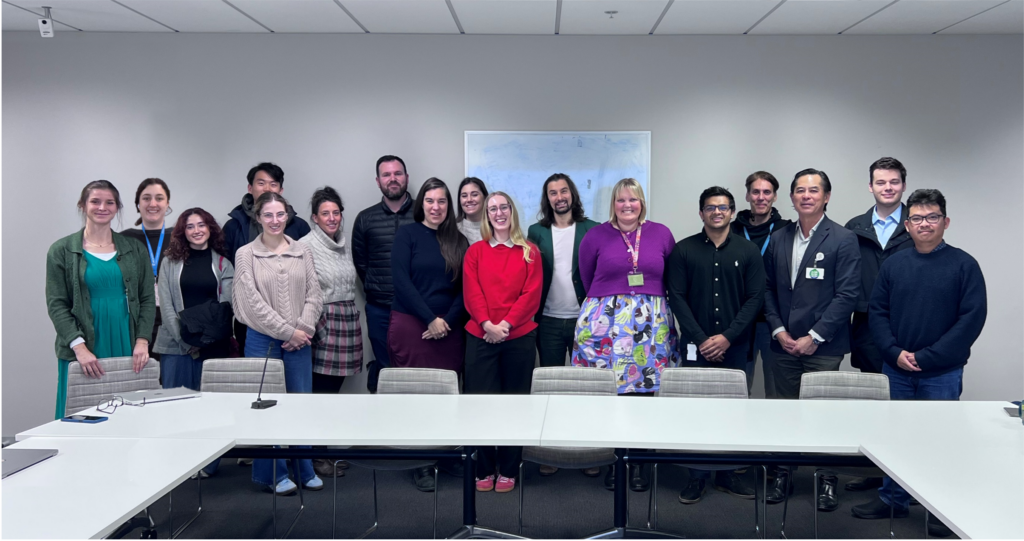
SAHMRI researchers want to see what happens to brain connections after a 2-week, Earth-based, simulated lunar mission.
This Australia-first mission (conducted by Adelaide University and ICEE.Space in October last year) saw 4 ‘analogue astronauts’ living as if in space. The CRATER facility replicates the conditions expected.
The astronauts tested mission systems, space suits and habitats, and undertook mission simulations and operational research. Their work is helping us understand how astronauts cope with living in space.
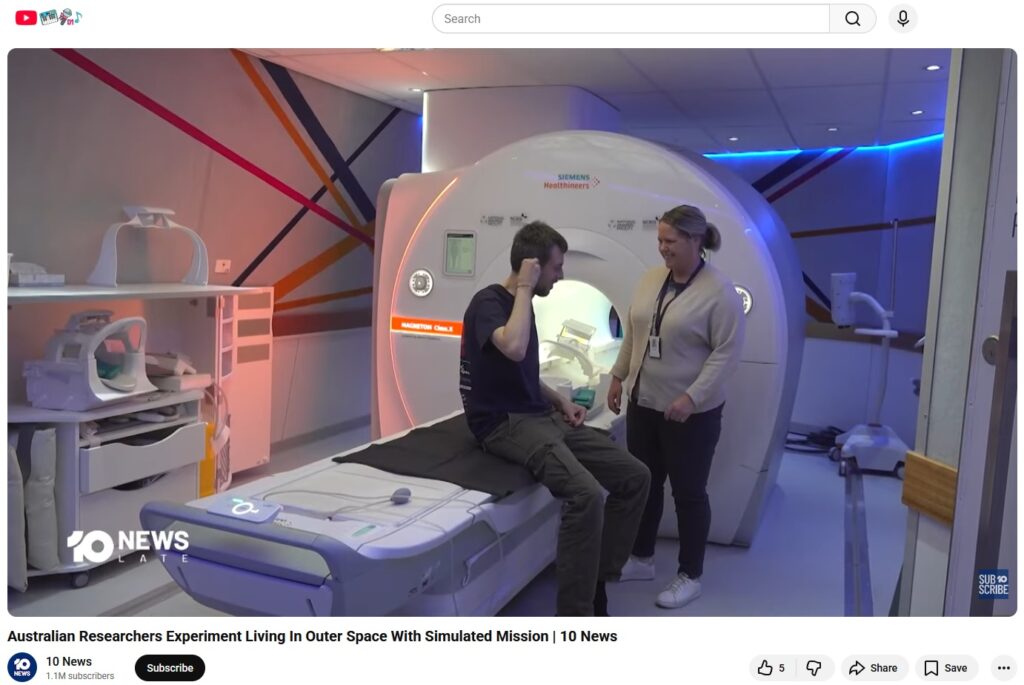
In conjunction with Professor Jesús Martín-Fernández (a functional neurosurgeon and neuroscientist, Head of Research, ICEE.Space), SAHMRI researchers used MRI to look for changes in the astronauts’ brain function networks caused by the isolation and mission tasks.
Space affects executive function and emotions
The functional MRI (fMRI) scan performed on the astronauts before and after the mission are expected to reveal clear differences for their brain networks.
Clinical Director of the NIF Node CRIC, Dr Andrew Dwyer, says that brain function networks are key to how people adapt to different situations.
“In these missions, the analogue astronauts experience a range of different executive functions, emotions and time perception changes. Using fMRI we can map how those networks respond to different situations.”
Professor Anna Ma-Wyatt (Adelaide University), psychologist and specialist in behavioural neuroscience and vision science, explains that astronauts must carefully manage isolation, confinement and sensory deprivation during missions to space.
Results from the mission will contribute to a better understanding of “how the novel physical environment of space affects astronauts’ mental and cognitive wellbeing and how we can mitigate the risks associated with long-term space exploration,” she said.
Mission demonstrated multisite data collection
The mission was replicated around the world simultaneously in the USA, Austria, Poland and Brazil. It was the largest analogue exercise so far, and was a world-first because of its multisite feature.
ICEE.Space co-founder Charlotte Pouwels emphasises how the mission showcases “the unrivalled potential of international collaboration.”
These kinds of studies allow researchers to prepare for space missions by testing that new protocols and techniques are reliable and effective.
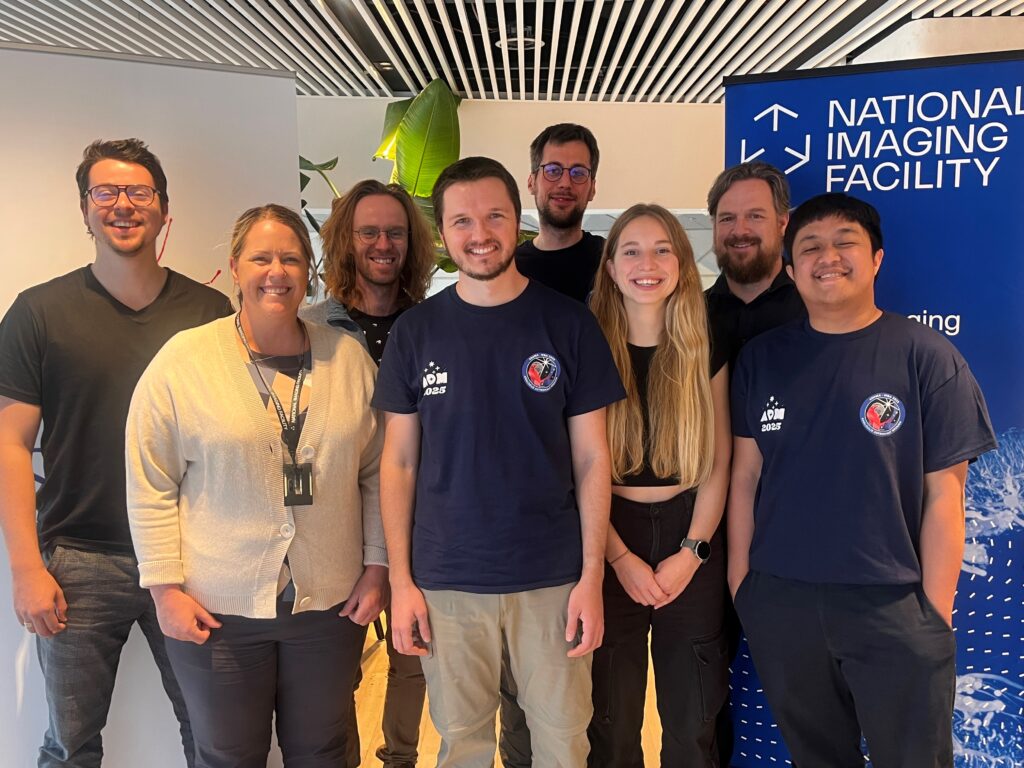
NIF’s Scientific Advisory Committee Chair and WANIF Node Director, Prof Paul M. Parizel, whose team has done work in this space (no pun intended), emphasises the timeliness of imaging’s contributions for space health.
“In the hostile environment of interplanetary space travel, on-board imaging equipment could enable non-invasive monitoring of crew health and welfare,” he said. “The provision of standardised and quantifiable imaging data should allow mission control to protect the humans onboard the spaceship, identify risks early, and remediate before conditions worsen.”
Prof Parizel has worked extensively within space medicine and the effects of prolonged exposure to zero/micro-gravity conditions.
The teams have imaged Russian cosmonauts and European astronauts and cosmonauts both before their mission in space and after re-entry, as part of the pioneering work of medical physicist Prof Floris Wuyts and doctoral student Angeline Van Ombergen (University of Antwerp, Lab for Equilibrium Investigations and Aerospace) (such as this most recent paper), in conjunction with teams from Ludwig-Maximilians-University Munich (Germany) and Lomonosov Moscow State University (Russian Federation).
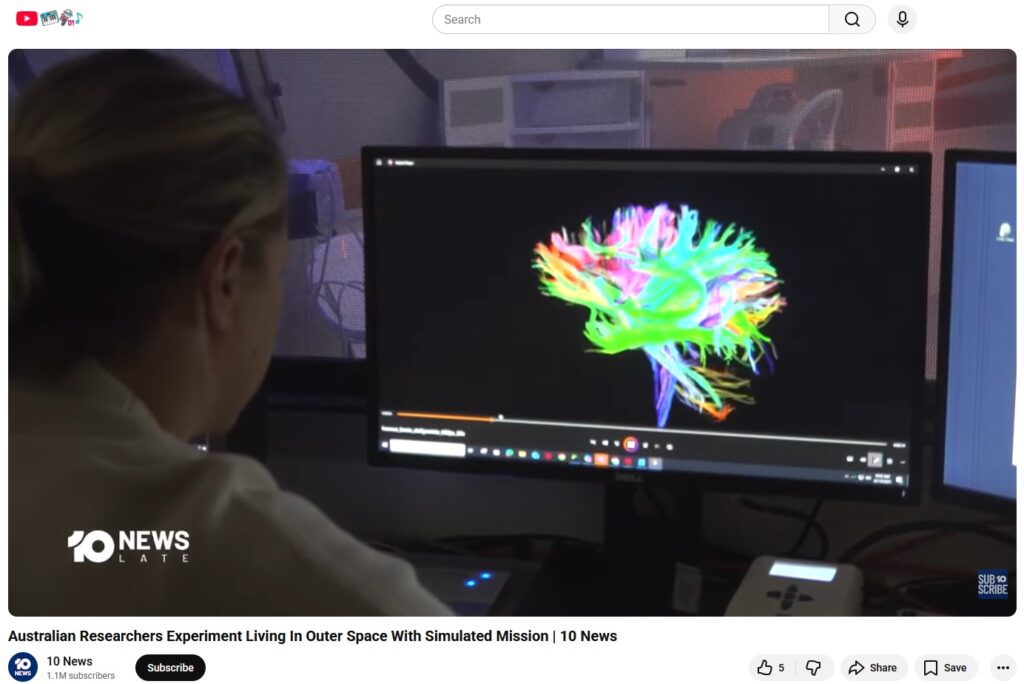
“We performed MRI brain scans on them looking at diffusion tensor imaging data and fluid distributions,” Prof Parizel said. “I was pleased to contribute by obtaining high-resolution MRI data and continuing to build the collaborations.”
An interesting finding by the group was lower rates of SANS within Russian cosmonauts, which may be partly due to earlier and more consistent use of specific countermeasures (e.g. lower-body negative pressure or different exercise protocols) compared to NASA astronauts.
With renewed interest and investment in space programs across the world, and humans spending longer periods of time in space, understanding and mitigating the effects of space travel and zero gravity on the body is a growing area of research.