

New research is using brain scans from the Clinical & Research Imaging Centre, a collaboration between SAHMRI and Jones Radiology, to better understand how AFL players’ head knocks – measured by smart mouthguards – impact their brain health and function.
Using the Cima.X 3T MRI instrument co-funded by SAHMRI, NIF, Jones Radiology and the South Australia Government, the research with Adelaide University aims to improve how concussion is detected and managed – especially for teenagers, children and women.
“Having better protected players means more years in the game and reduced long-term brain health challenges,” says researcher Dr Ryan Quarrington.
Mouthguards don’t yet indicate risk of brain damage
Currently, smart mouthguards may not be sensitive enough to alert teams to dangerous head knocks – and researchers want to improve that by better linking impact metrics to evidence from actual brain imaging.
“One player can receive an impact, go on playing and show no symptoms, and another player could receive the same impact and be knocked unconscious,” says National Imaging Facility neuroinformatics scientist Hugh McCloskey.
The custom mouthguards (from Australian company HitIQ) contain small motion sensors that record head impacts and estimate their severity.
Biomechanical engineer Dr Quarrington is working to increase the usefulness of smart mouthguards by using results from the mouthguards to model the hits to the brain and visualise the forces.
From there, Mr McCloskey combines the mouthguard information with brain MRI scans from players pre-season and throughout the season, looking for any changes in brain health and function and how that could relate to the hits they experienced.
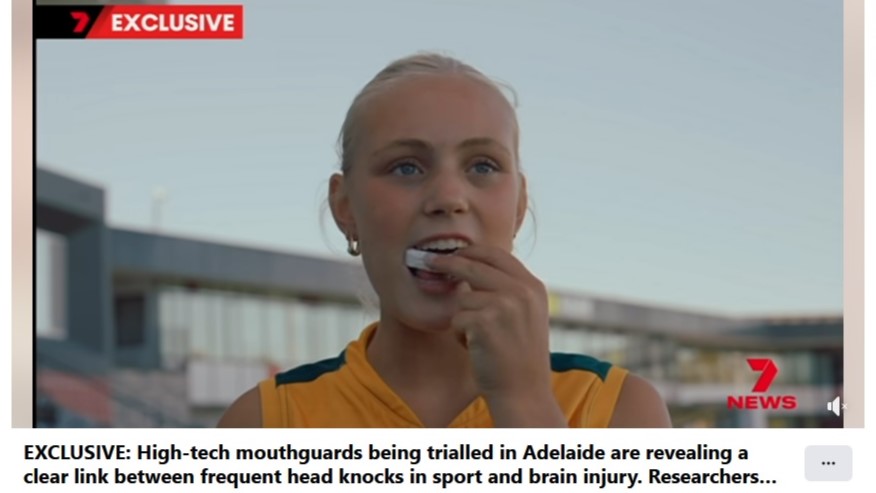
Evidence about hits will give players and teams more confidence
Dr Quarrington explains that although we know that the effects of repeated head knocks build up over time, such as those causing chronic traumatic encephalopathy (CTE), “we don’t have a good idea of how head impact metrics, including severity and number of events, relate to brain health and brain function.”
Removing doubt is key, Dr Quarrington says. “The real challenge is understanding exactly what [mouthguard] measurements mean for player safety and welfare,” he says.
“By combining it with the MRI images and neurocognitive assessments, we’re getting a clearer understanding of just how much impact is too much, and ensuring players who are assessed as fit can remain on the field.”
Another crucial aspect of the research is that most studies so far have been done on professional male athletes – but Mr McCloskey points out a lack of clinical and imaging data for young children and women.
“If we’re developing thresholds based on entirely adult male professional data, is that going to benefit everybody outside of that [group]? We want to see if anything’s different,” says Mr McCloskey.
Two seasons of data to collect, early results presented
There are two prongs to the research: the current SAHMRI/Adelaide University trial (including partnerships with the Adelaide University Rugby Club and Norwood Football Club’s SANFL and SANFLW teams) and a Channel 7 Children’s Research Foundation project grant to expand the research to junior athletes aged 14 to 16.
Researchers are currently recruiting for the second trial, and will collect data for both trials over two seasons of play.
Before each MRI session, players will undertake cognitive testing so the researchers can understand how any brain changes could relate to their memory, attention and problem-solving skills.
The first findings were presented early this month at a SAHMRI forum Elite Sport meets Elite Science as part of the AFL Gather Round Festival of Footy in Adelaide.
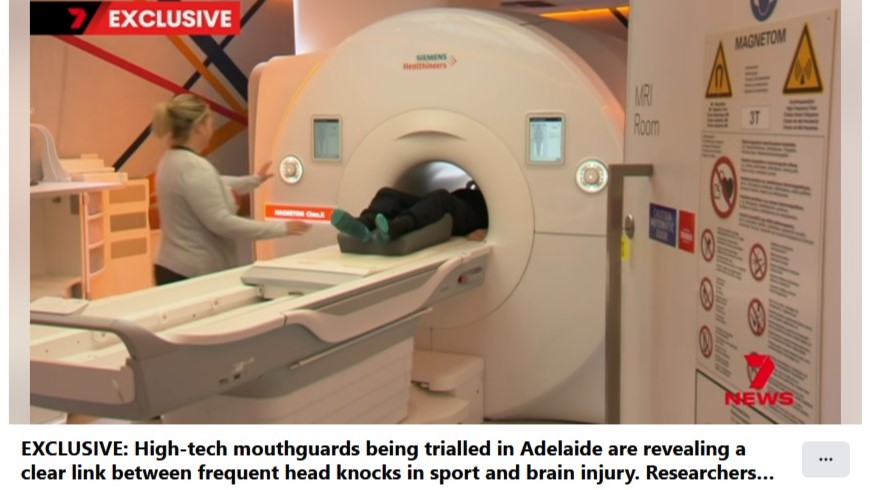
Gradient strength of 3T MRI instrument vital
Mr McCloskey was recruited from the Cardiff University Brain Research Imaging Centre, who helped develop the advanced MRI methods used on the Cima.X and the data-processing pipelines needed to detect these changes.
Mr McCloskey explains that the enhanced gradient strength of the Cima.X 3T MRI system at CRIC “allows us more sensitivity to detect changes that a traditional 3T MRI scanner just wouldn’t be able to see”.
The diffusion scans from the 3T MRI instrument indicates the micro-structural integrity of the white matter of the brain.
Mr McCloskey also highlights the benefit of working within the NIF facility for his NIF Scientist colleagues. “There are a lot of people here who are genuine experts in imaging, and they’re accessible if we need to troubleshoot,” he says.
“Overall, there are ways to diagnose concussion without imaging, but advanced imaging is needed to augment that research and development.”